.svg)
How Workforce Performance Management Works: Best Practices and Benefits
Move beyond annual reviews. See how workforce performance management uses continuous feedback, data, and coaching to align teams and boost business outcomes.

.avif)




On this page
Measure the work, not the signal.
See productive time and utilization by team, not just what looks active.
Key takeaways:
- Workforce performance management should be an ongoing process that aligns employee performance with business goals through continuous feedback, coaching, and data, rather than annual reviews alone.
- The strongest performance management approaches combine clear goals, regular check-ins, and role-specific KPIs to help employees improve.
- Work intelligence platforms give managers the data layer and the visibility needed to spot performance trends, identify coaching opportunities, and address challenges before they affect productivity or engagement.
Optimal workforce performance doesn't emerge from a single annual review.
Workforce performance management requires leaders to set an ongoing process that aligns individual and team performance with business goals through continuous feedback, measurable goals, and data-driven insights. It requires clear expectations and a commitment to helping employees improve every day.
As work becomes more distributed and dynamic, this continuous approach is more important than ever. But most organizations need better visibility into how work is actually progressing so they can make informed decisions and improve performance over time.
That visibility requires a precision work data layer from a dedicated work intelligence platform. With it, managers can identify challenges early, support employees effectively, and keep throughput moving in the right direction.
What Is Workforce Performance Management?
Workforce performance management is an ongoing process that helps organizations align, measure, and improve how employees and teams contribute to business goals.
It brings together goal setting, performance tracking, regular feedback, coaching, and activity data to give managers a clearer picture of how teams are performing and where they need support.
Workforce Performance Management vs. Traditional Performance Reviews
Although the two are closely related, they're not the same. Traditional performance reviews typically happen once or twice a year. Managers evaluate employee performance over a long period, often relying on memory, self-assessments, or limited performance data.
True workforce performance management takes a continuous approach. Instead of waiting for an annual review, managers monitor progress throughout the year using regular conversations, measurable goals, and ongoing performance insights. This helps improve employee performance, boost workplace efficiency, and positively impact overall business outcomes.
Benefits of Effective Workforce Performance Management
An effective workforce performance management system benefits everyone. It gives employees greater clarity, helps managers make better decisions, and creates a culture of continuous improvement.
How Workforce Performance Management Works: The Step-by-Step Process
Workforce performance management isn't a single event. It's an ongoing cycle that helps organizations set expectations, measure progress, and continuously improve performance.
Here's what that process typically looks like.
Step 1: Define Key Performance Indicators (KPIs)
Every successful performance management program starts with clear expectations.
Define measurable KPIs that reflect the responsibilities of each role. A sales representative, software developer, customer support agent, and operations manager all contribute differently, so they shouldn't be measured using the same metrics.
Step 2: Check Role Alignment
Performance issues aren't always caused by employees. Sometimes the role itself isn't the right fit.
Review whether employees have the skills, responsibilities, and resources needed to succeed. Misaligned roles often lead to lower productivity, reduced engagement, and inconsistent results.
Step 3: Set SMART Goals and Team OKRs
Once KPIs are established, translate them into actionable goals.
Individual goals should follow the SMART framework: specific, measurable, achievable, relevant, and time-bound.
At the team level, Objectives and Key Results (OKRs) help align everyone's efforts toward shared business priorities while giving employees flexibility in how they achieve them.
Step 4: Track Progress with Data, Not Just Annual Surveys
Waiting until the end of the year to evaluate performance often means missed opportunities for improvement. Instead, it’s essential to monitor progress throughout the year using performance data, productivity trends, utilization calculations, and regular manager observations.
Continuous visibility allows managers to identify challenges early and make informed decisions based on evidence rather than assumptions.
Step 5: Hold Regular Check-ins
Performance conversations shouldn't happen only during formal reviews.
Short monthly or quarterly check-ins create opportunities to discuss progress, remove roadblocks, celebrate achievements, and adjust goals as priorities evolve.
Step 6: Coach Toward Objectives
Performance management works best when it's centered on development.
Use productivity insights to identify where employees need additional support, training, or coaching instead of focusing only on areas where they fall short.
Coaching encourages continuous improvement and helps employees build the skills they need to succeed over the long term.
Step 7: Recognize and Reward Performance
When employees consistently meet goals, improve performance, or contribute to team success, acknowledge those achievements. Recognition can take many forms, from public appreciation and career development opportunities to performance-based incentives.
How Data and Analytics Support Each Step
A workforce performance management process is only as effective as the data behind it. Without reliable insights, managers often have to rely on assumptions, inconsistent feedback, or annual reviews to understand performance.
Modern work intelligence platforms bring that information together in one place, giving managers a clearer view of productivity, utilization, and work patterns as they evolve.
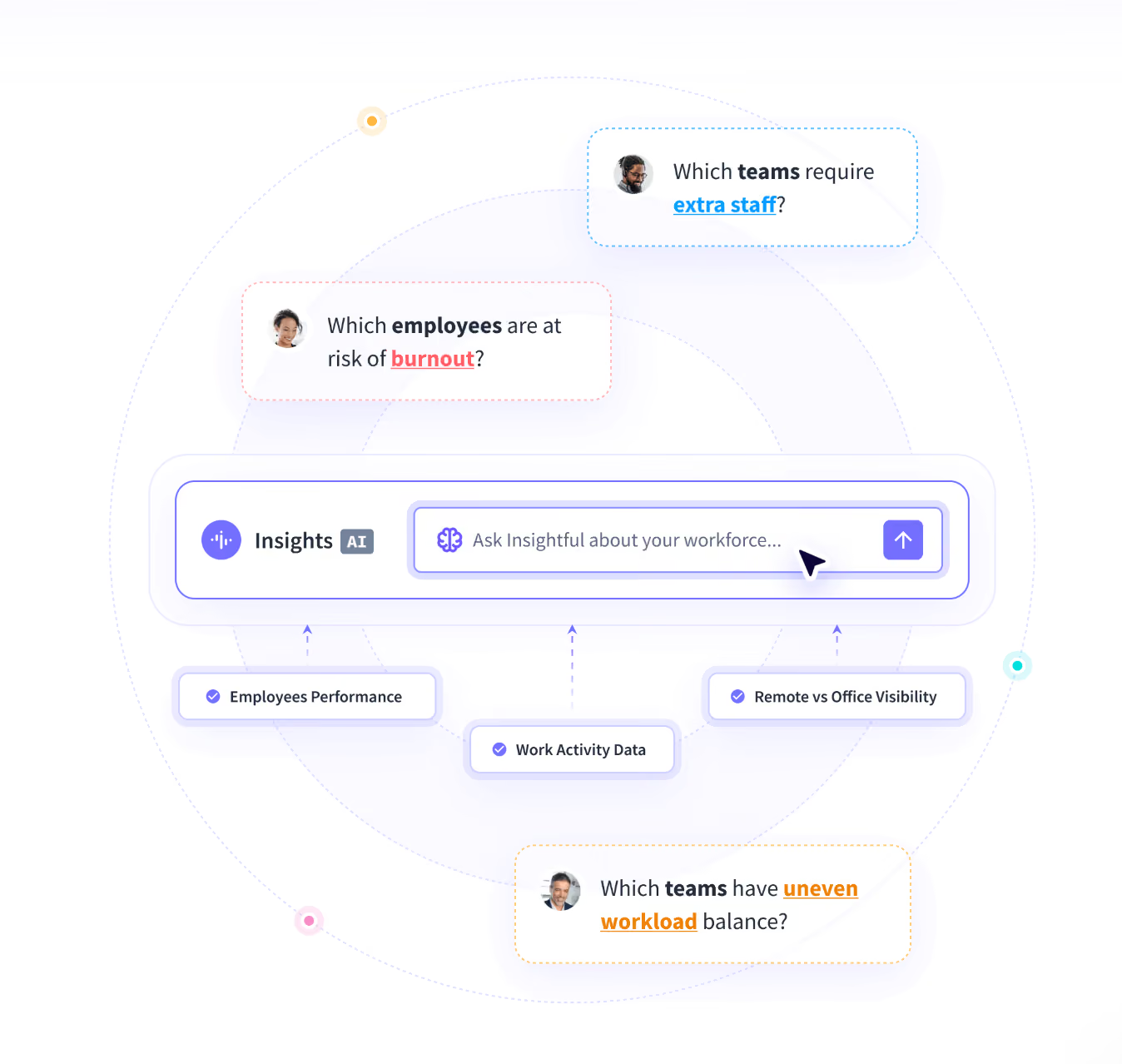
Insightful brings together advanced workforce analytics and workflow optimization features that support every stage of workforce performance management:
- Productivity Trends flag drops in focus, activity, and output as they happen, giving leaders the signal to intervene before performance declines.
- Utilization Calculations measure productive time against available time, so leaders can adjust staffing, allocation, and utilization targets with confidence.
- Workload Distribution shows exactly how work is spread across teams, enabling leaders to rebalance workloads and clear bottlenecks.
- Time Tracking & Auditing breaks down where time actually goes (billable, non-billable, idle), making it possible to reallocate time to higher-value work.
Workforce Performance Management in Action: Examples
No two organizations manage performance the same way, but the objective is always similar: help employees perform better while supporting business goals.
Here are a few examples of workforce performance management in action.
Example 1: Improving Customer Support Performance
A growing customer support team notices response times are slipping despite hiring more agents.
By reviewing ticket resolution, productivity, and utilization data, managers find that repetitive administrative work is taking time away from customers. After streamlining workflows and balancing workloads, the team improves response times without adding headcount.
Example 2: Helping Managers Work More Effectively
A manager spends most of the week in meetings, leaving little time for strategic work.
Performance data reveals too much collaboration time and not enough focus time. By reducing unnecessary meetings, delegating routine tasks, and protecting time for deep work, the manager improves both personal productivity and team performance.
Example 3: Identifying Coaching Opportunities
A sales team continues to miss quarterly targets.
Instead of assuming poor performance, managers review productivity trends and discover that newer employees are spending more time on administrative tasks than on selling. With targeted coaching and process improvements, the team begins meeting its goals more consistently.
Conclusion
True workforce performance management isn't something you do once a year. It's an ongoing process that keeps employees aligned, supports better decisions, and helps teams improve over time.
With clear goals, regular feedback, coaching, and the right data, managers can see what's working, spot challenges early, and help their teams keep improving.
Want a clearer picture of how your teams are performing?
Insightful's Workforce Analytics features gives managers real-time visibility into productivity, utilization, and performance. With the right context at their fingertips, they can coach more effectively, make better decisions, and support continuous improvement.
Book a demo to see it in action.
FAQs
What is workforce performance management?
Workforce performance management is the ongoing process of measuring, aligning, and improving how employees and teams contribute to business goals. It combines goal setting, continuous feedback, coaching, and performance data to support long-term success.
What are the benefits of efficient workforce performance management?
It helps improve productivity, align employees with business objectives, increase engagement, identify coaching opportunities, and support fairer performance, promotion, and compensation decisions.
What tools support ideal workforce performance management?
Organizations typically use a combination of workforce analytics platforms, productivity management software, OKR tools, and HR performance management systems to measure progress and support employee development. Work intelligence platforms like Insightful provide the most comprehensive look into work performance data, while allowing managers to connect team activity to bottom-line business outcomes.
How often should performance check-ins happen?
Many organizations are moving away from annual reviews in favor of monthly or quarterly check-ins. More frequent conversations allow managers to provide timely feedback, adjust goals, and address challenges before they grow.
.webp)
.webp)
%20(1).webp)
