.svg)


Process Improvement: What It Is, the Methods That Work, and Where Most Programs Go Wrong
What process improvement is, the methods teams actually use, and why most programs improve the process on the diagram instead of the one people run.

.webp)



On this page
Measure the work, not the signal.
See productive time and utilization by team, not just what looks active.


Key takeaways
- Process improvement is the ongoing practice of identifying an existing business process, measuring how it performs today against a clear baseline, and making small, deliberate changes to make it work better.
- Lean, Six Sigma, Lean Six Sigma, Kaizen, PDCA, Theory of Constraints, and Total Quality Management are the main methodologies teams use, each suited to a different kind of problem.
- A process improvement cycle moves through five stages: defining the process and goal, establishing a baseline, identifying where work is lost, designing and testing a change, then measuring the result and standardizing it.
- Most process improvement programs underdeliver because they build off a documented version instead of the process teams run day to day, making it difficult to know where you started or measure progress accurately.
Most process improvement methods start the same way. Someone maps out how the current process runs, then looks for ways to improve it. The issue is that everyone treats the documented process as the baseline for change, without first checking whether it matches the one people run day to day.
This mismatch happens because the map is built on what people say they do or what's written down on paper. It doesn't capture the real process, which has picked up extra steps, workarounds, and shortcuts that never make it into the documentation.
Improve the documented process and you improve the description. Knowing where you actually stand is what makes the rest of the work worth doing. This guide covers what process improvement is, the main methodologies, how an improvement cycle runs, and why a precise baseline decides whether any of it works.
What is process improvement?
Process improvement is a systematic method to eliminate inefficiencies from existing business processes. This practice involves continuously analyzing current processes to determine where time, quality, or effort is being lost, then making targeted, incremental changes to close that gap. The goal is to minimize errors, reduce waste, and improve efficiency.
The scope of process improvement depends on what you're trying to fix. It might mean tightening a single bottleneck stage, such as the approval queue between intake and processing, or following a piece of work across every team it touches, from the first request to final delivery.
A process, in this sense, is any sequence of steps that produces a repeatable outcome: onboarding a new hire, processing an invoice, resolving a support ticket. If a team runs it more than once and the steps stay roughly consistent, it qualifies.
Treating process improvement as a one-time project with a start and end date is a common mistake. Teams run a workshop, implement a fix, and consider the work finished. The process keeps evolving after that, so the effort to improve it should too.
This isn't automation. Speeding up a flawed step just produces a faster version of the same problem. Nor is it a full redesign, which discards the existing process completely and starts over from scratch. The order matters: discover how the process runs, improve it, then automate what is still worth automating. Process improvement works with the process that's already there and makes it better, one change at a time.
Process improvement vs process optimization vs reengineering
Process improvement, process optimization, and process reengineering get used interchangeably, but they describe different scopes of change.
Picking the wrong one means spending weeks on the wrong fix, then having to explain why nothing changed. Knowing which one you're doing shapes how a team scopes the project, what it tells leadership to expect, and which methodology it reaches for.
These three terms sit at different points on the same spectrum. Process improvement operates continuously and locally, making small changes inside a process that already works.
Process optimization looks at the process as a whole, making improvements aimed at one specific target such as speed, cost, or quality. Reengineering goes further still, tearing down the process completely and rebuilding it from the ground up.
For more definitions of related terms, see our glossary of work intelligence terms.
The main process improvement methodologies
Several established methods have grown up around process improvement. Each one starts from a different question.
- Lean: The method draws on Toyota’s manufacturing practices that focus on eliminating waste while maximizing customer value. It targets specific waste types, such as waiting, excess handoffs, unnecessary approvals, and rework, stripping a process back to the steps that add value.
- Six Sigma: This one reduces variation and defects through statistical analysis. Where Lean asks what to cut, Six Sigma asks why results differ from one run to the next, using data analysis to find the root cause. The work runs through a defined sequence of define, measure, analyze, improve and control, set out by the American Society for Quality, which maintains the Six Sigma body of knowledge. It suits processes where precision matters more than speed, such as manufacturing tolerances or compliance-heavy work.
- Lean Six Sigma: Lean Run together, the two cut waste and reduce variation in the same effort. Teams reach for it when they need both speed and accuracy and want the decisions backed by data.
- Kaizen: Kaizen, Japanese for "change for the better" and usually rendered in English as continuous improvement, emphasizes small, incremental improvements made by the people doing the actual work. It relies on employee engagement to find and fix problems, building improvement into daily work rather than treating it as a separate initiative.
- PDCA (Plan, Do, Check, Act): A four-step loop for continuous improvement. Plan a change, test it on a small scale, check the result against the goal, then act by adopting, revising, or abandoning it altogether. The father of modern quality management Edward Demings preferred PDSA, with Study (S) in place of Check (C) , on the grounds that checking a change only asks whether it worked while studying it asks what it taught you. The loop works on its own for recurring problems, and it underlies the more structured experimentation in methods like Six Sigma.
- Theory of Constraints: A management approach built on the idea that a process can only move as fast as its slowest stage. It focuses on identifying and addressing that constraint to improve overall throughput.
- Total Quality Management (TQM): A management philosophy that treats quality as a shared responsibility across the whole organization rather than one department. It emphasizes customer focus, continuous feedback, and quality checks built into every process stage, including steps before the final output.
A team can use any of the above methodologies to produce results, but continuous process improvement is what stops a team sliding back to where you started. This posture treats improvement as an ongoing habit instead of a project with a defined end date, and it sits inside any of the methods above.
Process mining, one way to visualize how a process actually runs, helps teams stay close to the process instead of losing track of it once the fix is in.
The five steps of a process improvement cycle
Whichever methodology you use, the cycle follows the same five steps.
1. Identify the process and the outcome you are trying to change
Select the process that needs improvement and define clear objectives, such as a shorter approval cycle, a lower defect rate, or fewer customer escalations. Framing the process too broadly can result in changing several workflows, procedures, or systems at once. A vague target like "improve efficiency" describes intent without giving you anything to measure against.
2. Establish the current-state baseline
Map the selected process from start to finish, including the steps or interactions that may not be in your official documentation. From there, gather precise metrics for the outcome you are trying to achieve to understand your current performance. You'll also formalize a process improvement plan at this stage that covers what you're measuring, who owns the effort, the targets you want to achieve, and how you'll evaluate the results.
3. Analyze where time and quality are being lost
Once you have a baseline, look at the process to identify where time or quality is being lost. A stage might be running long, a handoff could create rework, or an approval might be sitting in someone's queue for days. For each one, ask why it happens, whether that's an unclear owner, a missing piece of information, or a step nobody needs anymore. Rank what you find by how much it impacts the outcome you're targeting, not by which one happens to be most visible.
4. Design and test the change
Start with the issue with the greatest impact. Develop your change, outlining the specific actions to take, the steps involved, and the timeline for implementation. Test it on a small scale first, starting with a single team or a use case, before applying it everywhere. A change that looks good on paper can still create a new bottleneck somewhere else, and a small pilot surfaces that problem while it's still cheap to fix.
5. Measure against the baseline and standardize
Measure your improvement metrics and compare the results to your baseline. Consider the full spread of results too, since a good average doesn't tell you whether the improvement held up consistently across every case. If your results meet or exceed your targets, standardize the change. Document the new steps, train your teams on them, and review it regularly to catch drift.
Why most process improvement programs underdeliver
A process improvement program can follow every recommended step and still underdeliver. Four problems account for most of it.
The current state is described from memory, not measured. Workshops and interviews capture the process people believe they run, built from what they remember, not what they measured. The real process has grown extra steps, workarounds, and exceptions that never get written down, so any fix you design is built around a process that nobody uses or follows.
The exception path is left out. Most improvement work focuses on the clean case, where the process runs in a single pass without delays or exceptions. In practice, exceptions are what cost you the most. A manager's sign-off can sit for days waiting on availability, or a ticket bounces between two teams before anyone takes ownership of it. Left unaddressed, these delays add up fast across day-to-day operations, so a fix that only accounts for the ideal scenario ends up missing where performance breaks down.
There is no comparable before-measurement. You can only prove an improvement by measuring where you are against where you started, and that only works if both were captured the same way. Many teams measure the new process in detail while comparing it against a rough guess. So you cannot tell whether anything changed, because the two numbers were never comparable.
The improvement is standardized on paper, not in practice. A team documents the new steps and trains everyone on them, but months later, half the group has reverted to old workarounds, and nobody noticed because they stopped measuring. Catching that means keeping the same measurement running after the change as before it.
Each of these problems traces back to the same underlying issue. Without an accurate picture of how work runs, teams end up improving a description instead of what's happening on the ground. Closing that gap requires having a strong starting point, based on a precise, structured view of the process.
See why business process optimization is an ongoing discipline rather than a one-off project.
Establishing a baseline you can trust
A baseline is more than one measurement taken before you start. What you measure, and how, decides whether you end up with numbers you can trust.
The baseline needs to reflect how work moves through every stage in practice, including the exceptions and rework the documented process leaves out. A loan application that gets kicked back twice for missing paperwork is part of the process too, and leaving it out means the number undersells how long the work really takes.
The method used to capture the numbers also has to stay consistent, or you can end up with two figures that describe two different things. A rough estimate from before a change and a live measurement tool after it will produce a gap, but that gap may just reflect the switch in method rather than any real improvement in the process.
Duration matters just as much as method. A short measurement window can make the result about timing rather than the process itself. A single week that includes a holiday, or one with lighter volume than usual, skews the number in whichever direction that week happened to run. The measurement needs to span enough time to average out these ordinary ups and downs.
Self-reported numbers describe intentions more than reality. Someone estimating their own cycle time gives you the version they aim for, not the one they run.
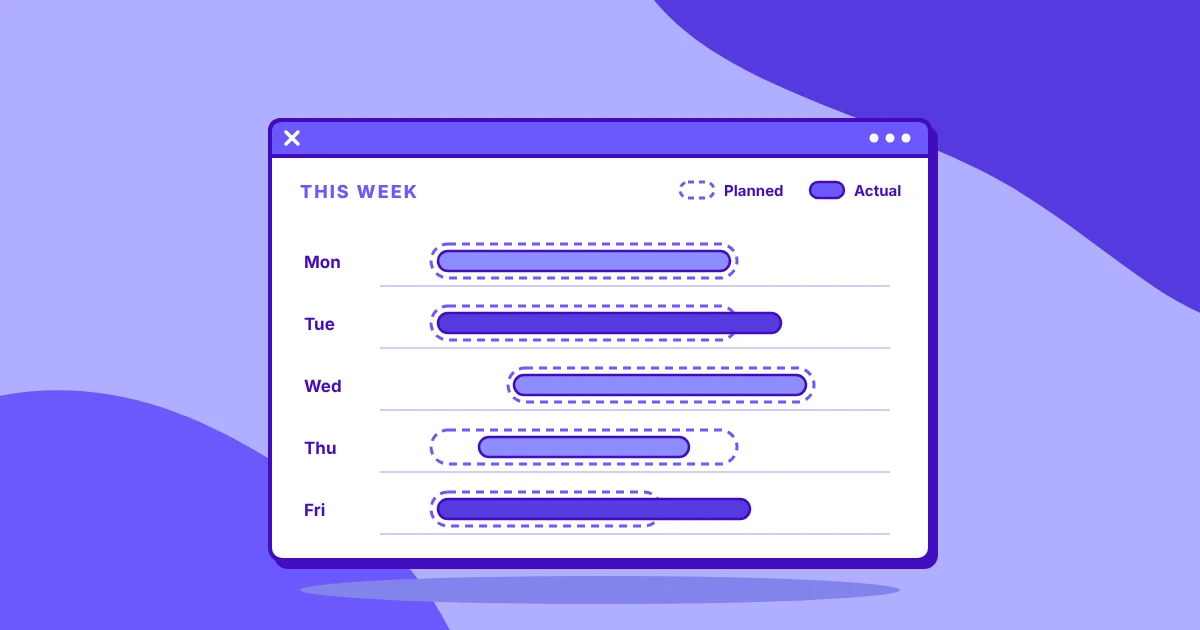
Insightful's Workflow Optimization maps a process end to end. It connects the time a stage takes back to the specific case or ticket it was spent on, and breaks down stage-level duration, movement between steps, repeat work, and workload distribution.
Together, that gives you a current-state baseline that connects to how a process really runs, and the ability to compare it against the same measurements after you make a change. A baseline doesn't choose the fix for you. It decides whether the one you choose is aimed at something real, rather than hypothesized.
Start with a measured baseline
The baseline you start from matters as much as the method you pick. Whatever methodology you choose starts with a number and tries to move it. The quality and accuracy of your measurement decides whether your process improvement effort earns its keep.
An estimate built on guesswork, a fix that ignores exceptions, or a comparison built on mismatched numbers have the same root problem: a baseline that was assumed instead of measured. Whether this is your first improvement cycle or your fifth, the sequence doesn't change. Discover errors and measure real signals first, then decide what to fix.
Workflow Optimization is currently in beta. Request beta access to see how your processes actually run.
Frequently asked questions
What is process improvement?
Process improvement is a systematic method to eliminate inefficiencies from existing business processes by identifying, analyzing, and making targeted changes that reduce errors, waste, and wasted effort. It is an ongoing practice rather than a single project, and it applies to any repeatable process, from loan approvals to customer onboarding.
What are the main process improvement methodologies?
The main methodologies are Lean, Six Sigma, Lean Six Sigma, Kaizen, PDCA, Theory of Constraints, and Total Quality Management. Each takes a different angle on the same goal, whether that means targeting waste, reducing variation, removing a bottleneck, or building a culture of ongoing quality checks. The right one depends on which kind of problem you are solving.
What are the steps in a process improvement cycle?
A process improvement cycle follows five steps. Identify the process and the outcome, establish a current-state baseline, analyze where time and quality are lost, design and test a change, then measure against the baseline and standardize what worked.
What is the difference between process improvement and process optimization?
Process improvement makes small, incremental refinements to a process that already works, while process optimization targets one process to hit a specific outcome, such as speed, cost, or quality. Reengineering goes further still, rebuilding the process from the ground up. Each addresses a different scope of change.
How do you measure process improvement?
You measure process improvement by comparing a current-state baseline against results captured the same way after a change. That baseline needs to reflect the real path work takes, including exceptions and rework, using a consistent method over enough time to smooth out normal fluctuations in volume or timing.
What is continuous process improvement?
Continuous process improvement is a posture rather than a specific methodology. It treats improvement as an ongoing habit instead of a project with a defined end date. A single successful fix only proves a method works once. Continuous improvement is what keeps delivering new gains over time.

.webp)



