.svg)
Governance & Roles for Structured Hybrid Work



Talk to Sales
Our dedicated team is here to
answer all your custom needs.

Governance & Roles
Policies don’t implement themselves. To scale hybrid work successfully, you need a clear governance model that assigns ownership, aligns teams, and ensures accountability at every level.
This section lays out the operational backbone of your hybrid strategy. From executive sponsors to cross-functional governance boards, team managers to IT and employees—every role contributes to making hybrid work consistent, fair, and resilient.
With this framework in place, you’ll be able to:
- Assign ownership for decision-making and enforcement
- Align cross-functional teams around shared KPIs
- Equip managers to lead hybrid teams equitably
- Empower employees to contribute to hybrid culture
- Maintain security, compliance, and operational support
- Create a feedback loop for continuous improvement
Together, governance and roles turn planning into practice and keep hybrid work evolving with your people and your business.
{{down-1}}
Executive Sponsor
Every successful hybrid work strategy needs a champion—someone at the executive level who sees hybrid as a strategic lever for performance, culture, and resilience.
The Executive Sponsor plays a critical role in signaling that hybrid work is a leadership priority. By approving policy direction, securing resources, and aligning the C-suite, they ensure hybrid work gets the long-term support it needs to thrive.This should be a senior leader with broad influence—typically the CEO, COO, or CHRO—who can champion hybrid work across people, operations, and strategy.
Responsibilities:
- Approving final hybrid policy and associated budget
- Aligning hybrid with company strategy, talent planning, and operational goals
- Communicating the leadership vision across the organization
- Endorsing and resourcing the Hybrid Governance Board
- Backing tools and policies that turn strategy into execution
Introduce the Executive Sponsor early in the rollout process. Their endorsement adds credibility and momentum, especially when introducing new tools, expectations, or behavior changes.
Hybrid Governance Board
The Hybrid Governance Board provides the cross-functional ownership required to keep strategy aligned, consistent, and evolving.
This group ensures hybrid work stays connected to business goals, legal standards, and employee needs. By reviewing metrics, managing exceptions, and coordinating communication, the board acts as the operational backbone of your hybrid model.
The board should be a cross-functional steering committee with representatives from HR, IT, Facilities, Legal, and Operations. Together, they own the hybrid strategy after rollout and ensure it remains responsive to data and feedback.
Responsibilities:
- Owning the hybrid work strategy following initial rollout
- Reviewing hybrid KPIs on a quarterly basis
- Recommending updates based on data, feedback, and business changes
- Managing exception requests and escalations
- Overseeing change management and internal communication
- Ensuring consistency and fairness across departments and geographies
Assign a rotating facilitator or chair to keep the board action-oriented. A quarterly cadence aligned with business planning cycles ensures governance stays proactive rather than reactive.
Change & Communication Lead
The Change & Communication Lead ensures hybrid work is understood, adopted, and sustained across the organization.
In some organizations, this is one role; in others, change management and internal communication are handled separately. What matters most is having clear ownership of rollout, messaging, and adoption, so hybrid practices are consistently reinforced.
This role usually sits within HR or Internal Communications and works closely with managers and leaders to keep hybrid practices consistent and fair.
Responsibilities:
- Coordinating rollout timelines and adoption plans
- Creating and maintaining hybrid playbooks, FAQs, and onboarding materials
- Delivering clear, inclusive communication on hybrid norms and updates
- Equipping managers and leaders with consistent talking points
- Gathering employee feedback to refine communication and support adoption
Treat hybrid communication like a product—test messages, collect feedback, and continuously improve how policies are explained.
Managers
In a hybrid model, managers are the linchpin between policy and practice. They translate organizational guidance into daily team rhythms and play a critical role in shaping fairness, trust, and performance on the ground.
Hybrid work decentralizes where and when work happens—but managers hold the power to keep teams aligned, connected, and supported. They shape how policy shows up in practice, and ultimately, how inclusive, sustainable, and effective hybrid work becomes.
This applies to all department heads, people managers, and team leads responsible for hybrid teams.
Responsibilities:
- Reinforce core hours, communication norms, and scheduling practices
- Guard against proximity bias in recognition, promotions, and assignments
- Ensure equitable participation in meetings, decisions, and visibility opportunities
- Provide coaching and feedback through regular 1:1s and team check-ins
- Uphold team communication guidelines and desk booking norms
- Act as the bridge to the Governance Board, surfacing feedback and exception requests
Equip managers with consistent language and tools. The more confident they feel leading hybrid teams, the more consistent your employee experience will be.
Employees
Hybrid work only succeeds when employees actively participate in making it fair, flexible, and accountable. Every eligible team member contributes—not just by following policies, but by shaping the culture that brings those policies to life.
In a distributed environment, small behaviors matter. From accurate location reporting to thoughtful async collaboration, individual habits build the trust and consistency that make hybrid work sustainable.
This applies to all employees eligible for hybrid or remote work.
Responsibilities:
- Accurately self-reporting work location using approved systems
- Following team-defined core hours and respecting async communication norms
- Participating in surveys, retrospectives, and feedback loops to improve hybrid practices
- Practicing inclusive communication and remote-first collaboration habits
- Supporting a culture where flexibility is earned through accountability
- Using available tools and templates to align with expectations and maintain transparency
Reinforce this role during onboarding and performance conversations. Hybrid success is shared—and clarity helps everyone contribute effectively.
IT & Facilities
Behind every successful hybrid model is a strong operational foundation. IT and Facilities teams ensure that employees can collaborate securely, that office space is used intentionally, and that the entire environment is designed to support flexibility without sacrificing control.
Their role spans infrastructure, security, support, and space planning, making them critical partners in hybrid execution. As hybrid work evolves, IT and Facilities must balance user experience with security, and flexibility with control—ensuring operations remain functional, resilient, and future-ready.
This includes technology and workplace operations teams responsible for maintaining the infrastructure that enables hybrid work.
Responsibilities:
- Maintaining secure, scalable remote access infrastructure (VPN, MFA, device compliance)
- Supporting collaboration tools, communication platforms, and desk booking systems
- Monitoring endpoint security and ensuring adherence to device usage policies
- Managing office layout, capacity, and hot-desking logistics
- Tracking office utilization to inform planning and policy updates
- Collaborating with the Governance Board to provide operational data for decision-making
Schedule regular cross-functional reviews with HR, Legal, and Compliance to align on evolving needs—especially for cross-border work, privacy standards, and real estate utilization.
Governance Toolkit
These tools support hybrid governance execution across strategy, operations, compliance, and communication. Each resource maps to one or more governance roles introduced above. Use them together to drive clarity, consistency, and accountability.
📥 Make sure to get the Hybrid Work Governance Handbook here.
Your master playbook for how governance works—from role definitions to decision rights and escalation protocols. Use it for policy rollouts, onboarding governance board members, and aligning cross-functional teams.
Relevant for: Executive Sponsor, Hybrid Governance Board, Change & Communication Lead, Managers, IT & Facilities
📥 Get the Quarterly Governance Rhythm Checklist here.
A recurring checklist to structure governance reviews—ensuring hybrid policies stay current and effective. Use it for quarterly reviews, board cadences, and aligning hybrid to business changes.
Relevant for: Executive Sponsor, Hybrid Governance Board
📥 Download the Hybrid Work Exceptions Tracker here.
A log template to track and manage policy exception requests (e.g., location flexibility, non-compliance). Use it for reviewing and escalating hybrid-related requests in a structured way.
Relevant for: Managers, Hybrid Governance Board, IT & Facilities
Next: Turn Strategy into Daily Execution
Clear roles and governance set the rules. Continue to Section 4 and see how visibility and data keep hybrid work fair, compliant, and high-performing day to day.
Missed the implementation plan? Go back to Section 2.


Hybrid Policy Falling Apart in Practice?
Stop guessing. Get clear, real-time visibility into how work actually happens.



Works Where Your Team Does
Support well-being across Windows, macOS, and Linux.
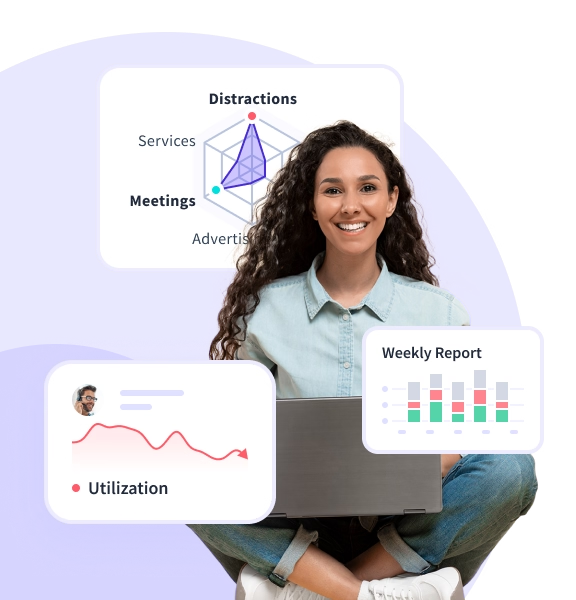
Clarity for Hybrid Teams
Insightful shows how work happens day to day.

Recommended for You
Learn how to diagnose current work patterns, define role eligibility, and align leaders around a hybrid model worth piloting.


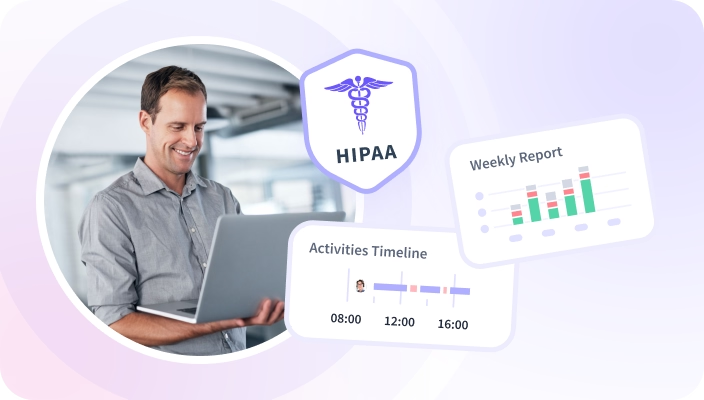
Turn strategy into action. Test your hybrid model, manage risk and compliance, and refine it before scaling.
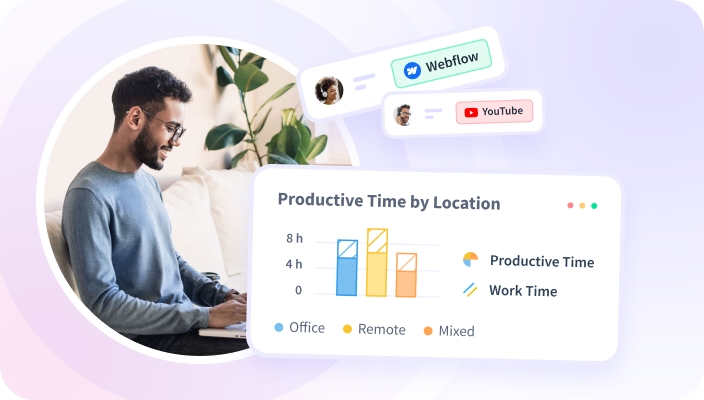
See how visibility and data help teams maintain performance, equity, and compliance as hybrid work operates daily.